extracts
good paragraphs, sentences.

Here are some extracts, paragraphs and lines which really struck me this week in my reading.
Sam Byers review of the novel The Silver Book in The Guardian. I always look out for reviews by Sam Byers and this one captures what I think is a problem not just in the book reviewed but perhaps a lot of contemporary literature.. ( I did like the author Laing’s last book on gardens however)
Most people, not Pasolini, are ruled by fear,” Laing asserts, pressing Pasolini into service as an avatar of political and creative courage. It’s an evasion, because much as The Silver Book might strike a revolutionary pose, it is a novel of class-bound conventionality – one that flirts again and again with transgression, only to back timidly away. Cruising – both a vital part of Pasolini’s life and the backdrop to his unsolved murder – is mentioned but never in any detail depicted. Fascism is alluded to but its victims and machinery remain invisible. Rome’s sub-proletarian world remains untimely and extraneous.
The Silver Book is a novel fatally undermined by all the things it invokes without daring to depict. Take, for example, Salò – in which Pasolini refashions the Marquis de Sade’s 120 Days of Sodom into a visceral postmortem of fascist violence. Reading the script, Nicholas “enters hell”. Filming is described as “the daily descent into hell”. The reader, though, is spared any such experience. Instead, Laing gives us Salò as dressmaker’s dream – an array of props and costumes cleansed of their power to shock.
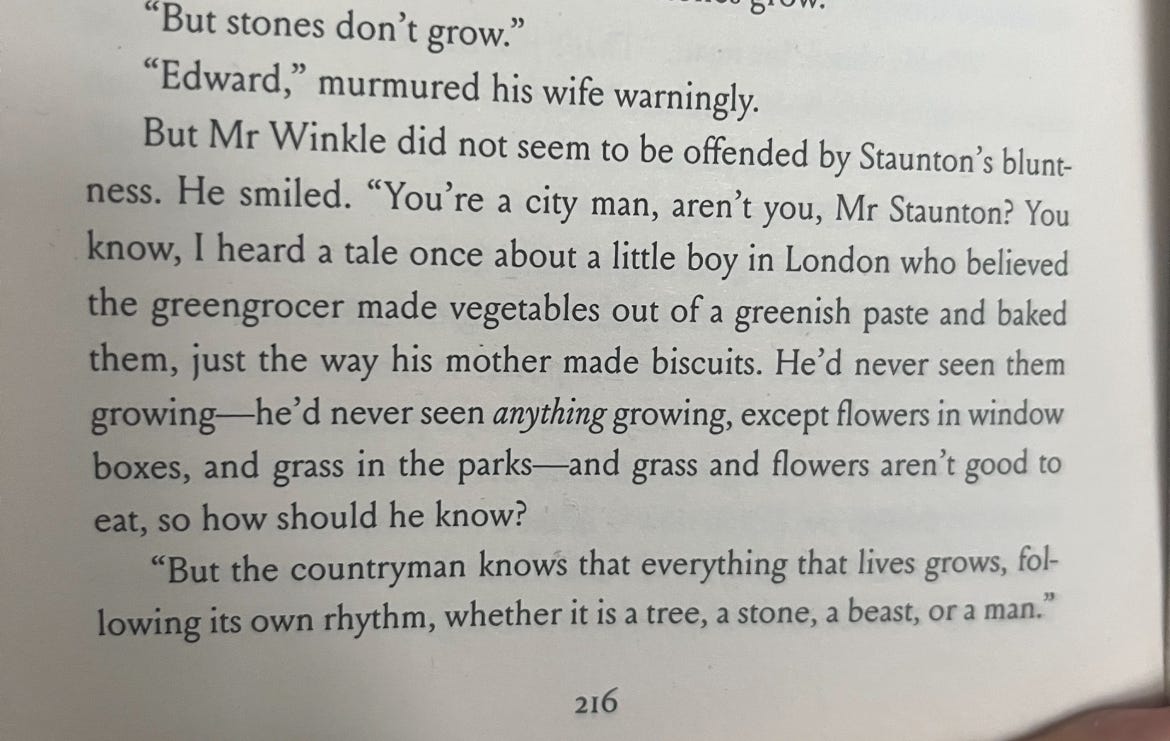
From Lisa Tuttle’s short story “Where the Stones Grow” is this very pleasing image:
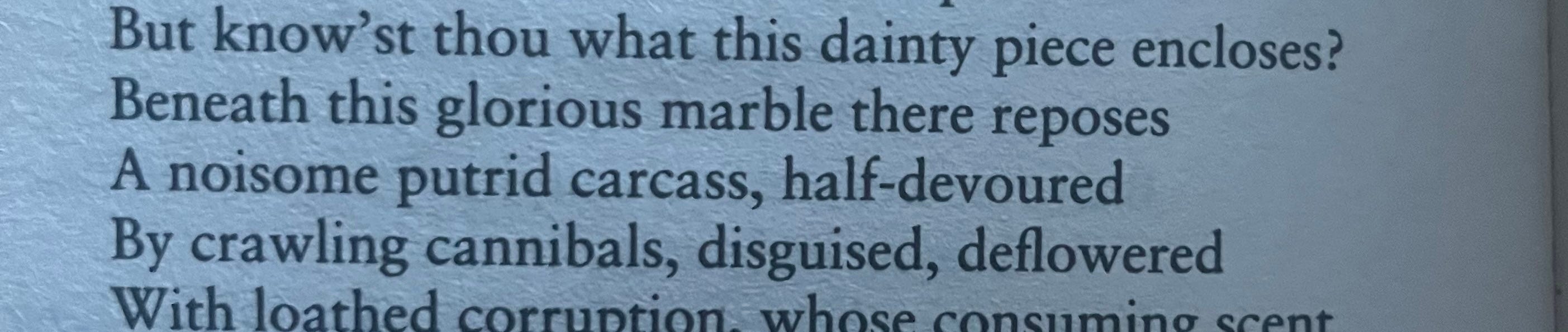
From On a Monument by Francis Quarles an English metaphysical poet.
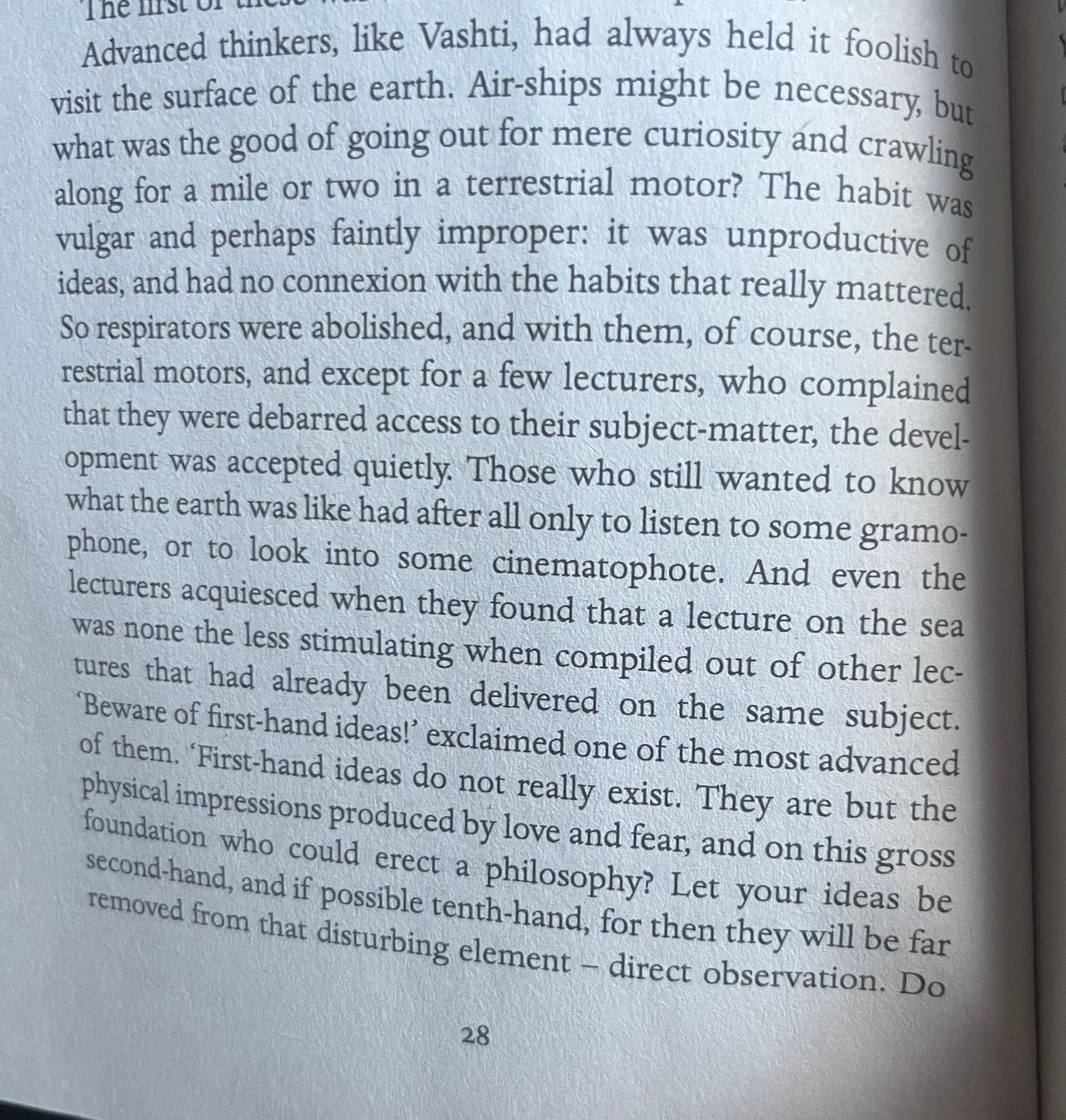
I am reading E.M. Forester’s speculative stories, I like how they have the same tooty quality as Ealing Studio films like The Man in the White Suit. ‘The Machine Stops’ of course is the most famous, in which a woman ‘with a face as white as a fungus’ who is a ‘swaddled lump of flesh’ sits in a small room ‘throbbing with melodious sounds’ where she video chats all day with others in similar rooms. While he disdainfully and gleefully imagines how we basically live today, I also noticed how he seems to write of what our relationship to knowledge building ( and AI) has become. We think our contemporary civilisation is so great and innovative but we haven’t really done anything beyond what an Edwardian mind can predict and laugh at.
It’s nice to contrast with this scene from Room with a View which is possibly one of my favourite sections in any novel, in which a reverend and two young men swim in an English pond.
They climbed down a slippery bank of pine-needles. There lay the pond, set in its little alp of green—only a pond, but large enough to contain the human body, and pure enough to reflect the sky. On account of the rains, the waters had flooded the surrounding grass, which showed like a beautiful emerald path, tempting these feet towards the central pool.
“It’s distinctly successful, as ponds go,” said Mr. Beebe. “No apologies are necessary for the pond.”
George sat down where the ground was dry, and drearily unlaced his boots.
“Aren’t those masses of willow-herb splendid? I love willow-herb in seed. What’s the name of this aromatic plant?”
No one knew, or seemed to care.
“These abrupt changes of vegetation—this little spongeous tract of water plants, and on either side of it all the growths are tough or brittle—heather, bracken, hurts, pines. Very charming, very charming.”
“Mr. Beebe, aren’t you bathing?” called Freddy, as he stripped himself.
Mr. Beebe thought he was not.
“Water’s wonderful!” cried Freddy, prancing in.
“Water’s water,” murmured George. Wetting his hair first—a sure sign of apathy—he followed Freddy into the divine, as indifferent as if he were a statue and the pond a pail of soapsuds. It was necessary to use his muscles. It was necessary to keep clean. Mr. Beebe watched them, and watched the seeds of the willow-herb dance chorically above their heads.
“Apooshoo, apooshoo, apooshoo,” went Freddy, swimming for two strokes in either direction, and then becoming involved in reeds or mud.
“Is it worth it?” asked the other, Michelangelesque on the flooded margin.
The bank broke away, and he fell into the pool before he had weighed the question properly.
“Hee-poof—I’ve swallowed a pollywog, Mr. Beebe, water’s wonderful, water’s simply ripping.”
“Water’s not so bad,” said George, reappearing from his plunge, and sputtering at the sun.
“Water’s wonderful. Mr. Beebe, do.”
“Apooshoo, kouf.”
Mr. Beebe, who was hot, and who always acquiesced where possible, looked around him. He could detect no parishioners except the pine-trees, rising up steeply on all sides, and gesturing to each other against the blue. How glorious it was! The world of motor-cars and rural Deans receded inimitably. Water, sky, evergreens, a wind—these things not even the seasons can touch, and surely they lie beyond the intrusion of man?
“I may as well wash too”; and soon his garments made a third little pile on the sward, and he too asserted the wonder of the water.
It was ordinary water, nor was there very much of it, and, as Freddy said, it reminded one of swimming in a salad. The three gentlemen rotated in the pool breast high, after the fashion of the nymphs in Götterdämmerung. But either because the rains had given a freshness or because the sun was shedding a most glorious heat, or because two of the gentlemen were young in years and the third young in spirit—for some reason or other a change came over them, and they forgot Italy and Botany and Fate. They began to play. Mr. Beebe and Freddy splashed each other. A little deferentially, they splashed George. He was quiet: they feared they had offended him. Then all the forces of youth burst out. He smiled, flung himself at them, splashed them, ducked them, kicked them, muddied them, and drove them out of the pool.
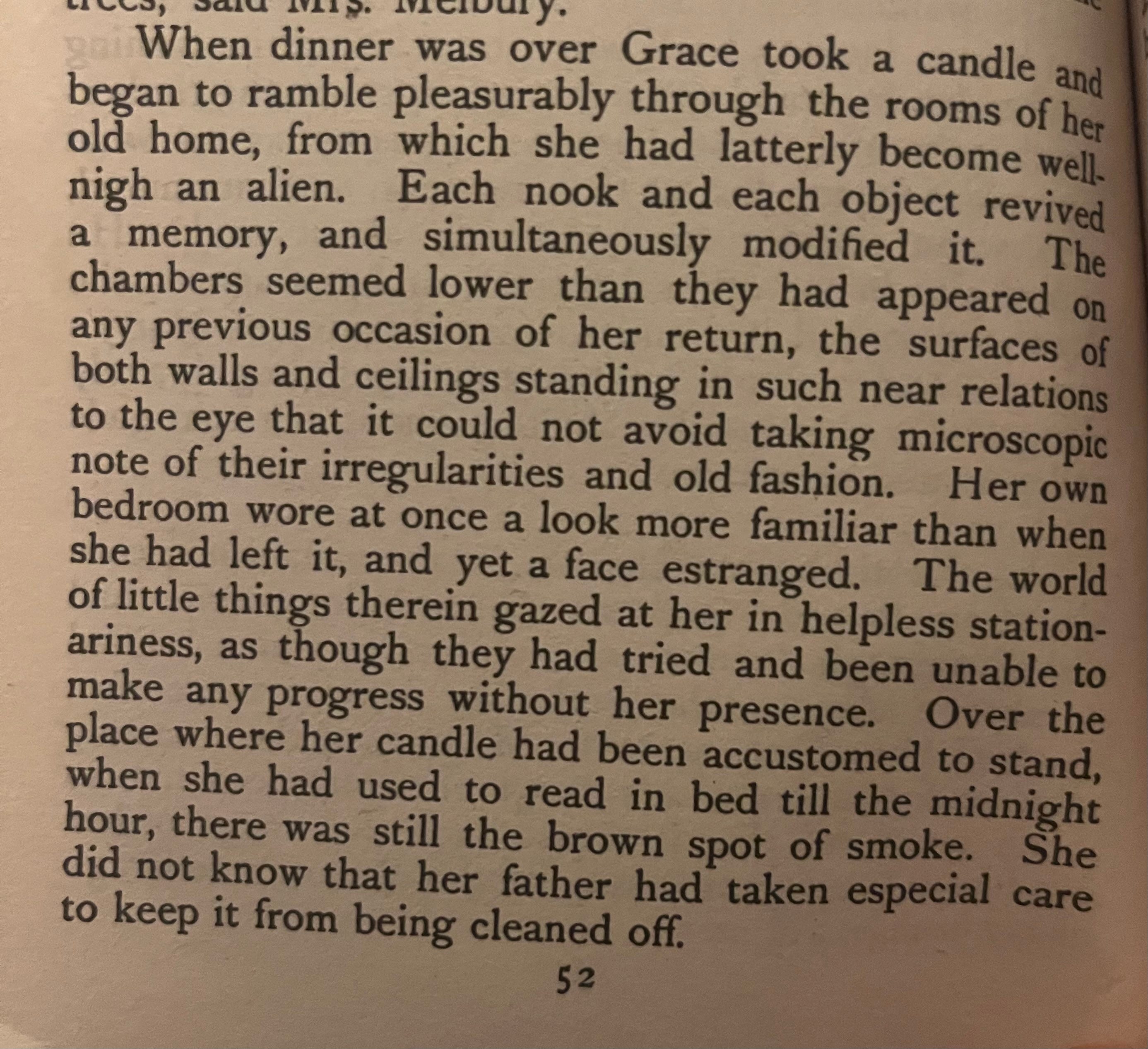
I am very much enjoying Hardy’s The Woodlanders which feels worlds away from 2025. It depicts embarrassment, different minds and expectations so brilliantly. The mortification of a young man when his much cleverer crush finds a slug in the salad he serves to impress her, and her face is accidentally splattered with stew. Everything is illuminated by lanterns and candles, there are great masses of birds and you can almost taste the cold, crisp country air. It is extinct details, like the smoke stain on the ceiling from too much reading..
“He could detect no parishioners except the pine-trees, rising up steeply on all sides, and gesturing to each other against the blue.” I love that whole passage from A Room With A View, too, Camilla. (And the movie version does it justice.)
There’s something quietly disturbing about the idea of vegetables being baked out of a greenish paste!